



A startup is ready to launch when it can accept a suitable customer commitment and deliver it lawfully and reliably. Registration is one part of that readiness. This article focuses on the first controlled delivery in the UAE: checking permissions, responsibilities, payment arrangements and support before increasing demand or making promises the operating model cannot yet meet.
Separate setup, validation and operational launch
Market validation examines whether a problem and proposed offer deserve further investment. Legal setup establishes the relevant entity and permissions. Operational launch tests whether the business can deliver its promise under real conditions. Progress in one area does not automatically complete the others.
For example, a positive customer interview is not an order, and an initial approval does not authorise the business to operate. Keep a readiness list that identifies the evidence needed for each dependency. The list should reflect the actual activity and jurisdiction rather than a generic package advertised online.
Verify the specific permission and ownership position
The UAE Government’s guidance explains that full foreign ownership is available for many mainland activities, subject to the applicable framework and exceptions. The old blanket claim that most structures require a 51% Emirati partner is not a reliable general rule. Confirm the exact activity and legal form with the competent authority.
Check the licence scope, location conditions and any additional approvals relevant to the service or product. Mainland and free-zone arrangements are not interchangeable, and a test sale does not automatically fall outside licensing requirements. This article does not supply an activity-specific legal or tax determination.
Define the first customer promise
Write down what will be delivered, to whom, by when and under what acceptance conditions. Include what is excluded and what the customer must provide. A narrow, understandable offer is easier to test than a broad promise to solve every related problem.
Define the route for questions, changes, cancellations and problems. Confirm applicable consumer, contractual and other requirements for the activity. Do not copy another business’s terms without checking whether they fit the offer and the rules that apply to your operation.
Make the promise checkable. For a report-writing service, specify the topic, required data, draft delivery date and acceptance process. For a product, specify its features, quantity and delivery date. Record these details in an order confirmation the delivery team can consult. This makes any gap between the request and available capacity visible before accepting the commitment.
Rehearse the handovers
Follow one order from receipt to closure. A handover transfers the task and its information to the person responsible for the next step. Check the process in this order:
- Receive and confirm the order against the authorised offer.
- Check stock, capacity or specialist availability.
- Confirm payment and invoicing arrangements with the responsible provider or adviser.
- Prepare and deliver the product or service.
- Record acceptance, exceptions and customer communication.
- Provide support and close the financial and operating records.
Assign each step an owner and a backup. Identify the information that must pass between them. A founder doing several roles still needs to distinguish the decisions, because missed handovers remain possible even within a two-person team.
Check cash timing and contingency
List payments due before the customer’s money becomes available: deposits, materials, delivery and other operating commitments. Distinguish a recorded sale from cash available to use. Payment settlement makes transaction funds available in the business’s balance with its payment provider. Moving them to the bank account also depends on the payout schedule and provider arrangements. A payment may appear successful before those funds become available. Confirm settlement timing and any relevant refund or chargeback process with the actual payment provider.
Compare available cash with payments due before customer funds arrive. If payments are higher, decide how the difference will be covered before accepting orders. This may require reducing the batch or revising supplier arrangements through a clear agreement. Do not count uncertain future sales as cash available today.
Prepare a proportionate contingency for the most important dependency. If a supplier fails, can the business delay transparently, use an approved alternative or stop taking new orders? Do not substitute a materially different product without the necessary agreement simply to protect a launch date.
Test exception handling before expanding the launch
Do not rehearse only an order that proceeds without difficulty. Choose a plausible exception, such as delayed delivery or a packing error, and identify who pauses the process, contacts the customer and authorises the remedy. Use test data and authorised arrangements without creating a real charge merely to test a screen.
Check that sales, delivery and support see the same status and that cancelled orders are not counted as successful deliveries. Record manual interventions and the time they require. If only the founder knows how to handle an exception, document the steps and train the backup before increasing orders. Expansion requires the ability to manage disruption as well as complete the ideal case.
The diagram summarises readiness: permission and clear scope, a deliverable promise, rehearsed delivery, then support and review. Cash timing and exception handling help establish the ability to complete this process.
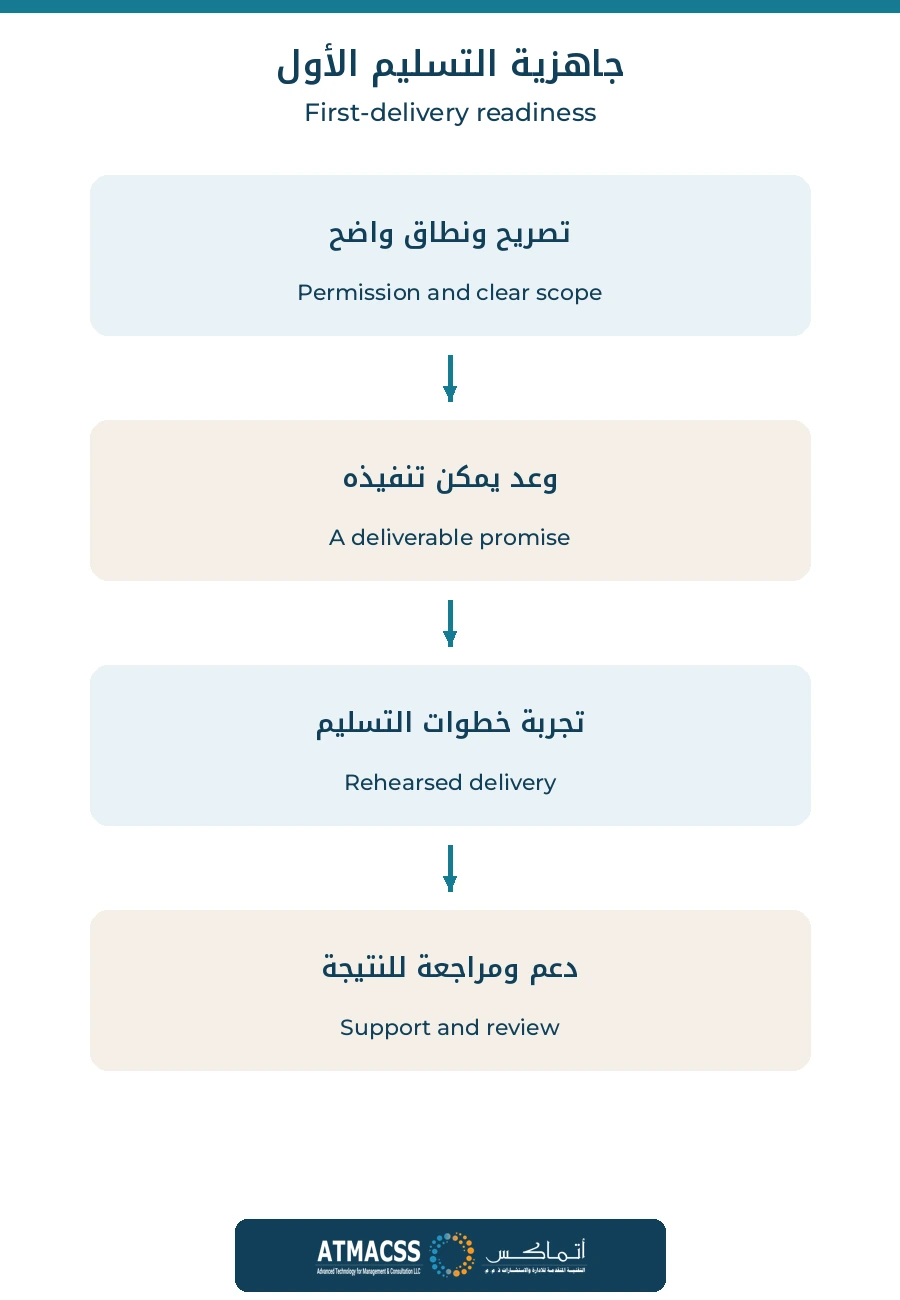
Hypothetical example: the first batch of orders
A fictional startup plans a first release of 10 orders. It has confirmed capacity for 8 during the promised period. Rather than advertising immediate fulfilment for all 10, it accepts 8 orders within confirmed capacity. It offers a later date for the other 2, subject to capacity verification and customer agreement. These numbers are an operational example, not a recommended launch size.
The team rehearses one order using the planned payment, packing and support process. It discovers that the courier collection cut-off occurs before packing is complete. The useful action is to change the packing schedule or agree a different collection arrangement, then repeat the test.
After the first actual deliveries, it checks timeliness, errors, customer questions and cash received. The founder records what failed and who will fix it. A launch is not successful merely because all advertisements ran or the website accepted orders.
Make the launch decision explicit
Use three possible decisions: proceed within defined limits, proceed after specified gaps are closed, or defer. Record unresolved permissions, unsafe conditions or critical delivery gaps as reasons to pause. A deadline set for promotion should not override a missing operating requirement.
A conditional decision does not authorise delivery before its conditions are met. Give each gap an owner, deadline and closure evidence, such as a confirmed collection time or successful order rehearsal. Assign someone to check the evidence and approve the start. Record the order limit, review date and reasons for pausing new orders.
Start with a rehearsal and a limited commitment the business can actually support. Expand only after the evidence justifies it. Use the separate articles on validating entrepreneurship opportunities and registration readiness for those earlier decisions.